Energy-Efficient Phasedown of HFCs: Case Study of Room Air Conditioner (RAC) Investment Opportunities in Brazil
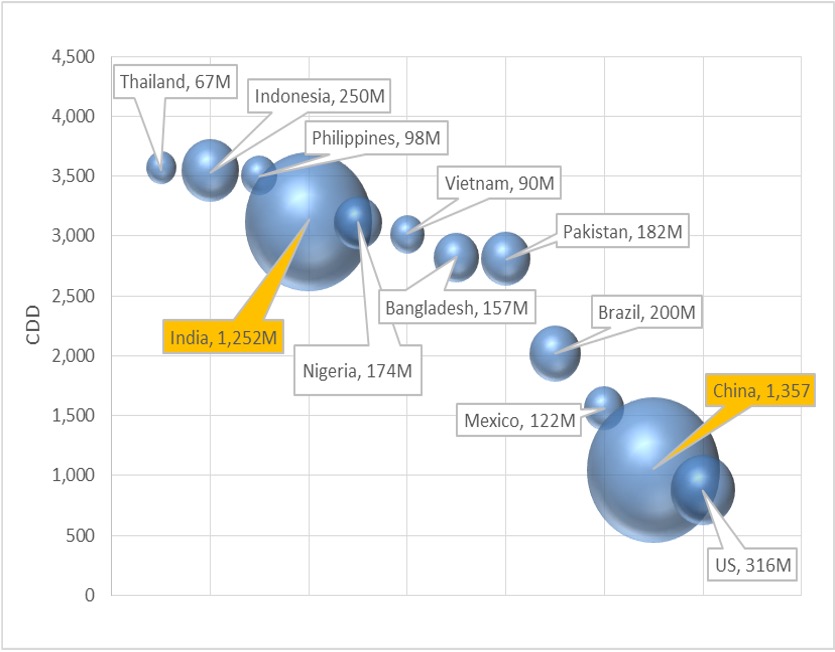
This paper documents that air conditioners sold in Brazil and most other A5 Parties have far lower energy efficiency than the products sold by the same companies in developed countries (non-A5 Parties). The study is original and unique because a certification laboratory contrasts the energy performance of brands for the same size ductless mini-split room air conditioners.
Like other studies, this paper shows that the added cost of higher efficiency would be rapidly paid back to residential AC owners in lower electricity costs, and that clean air, health, and agricultural co-benefits of energy efficiency are in the national and global interest. Like other studies, this paper shows residential AC buyers are being more influenced by purchase price without proper consideration of higher ownership costs and global environmental damage avoided by higher energy efficiency.
Unlike other studies that try to encourage self-interest with labelling, this paper investigates more comprehensively the special circumstances of the Brazilian market situation and recommends: 1) accelerated top-down revision of current minimum energy performance standards (MEPS), and 2) accelerated local manufacture of inverter compressors with superior energy efficiency for lower-global warming potential (GWP) refrigerants.
In addition, this paper recommends an investment strategy for government organizations in Brazil that: 1) sets the MEPS at the level justified by electricity savings plus social co-benefits, 2) procures residential ACs on the basis of Life Cycle Climate Performance (LCCP), 3) finances the added cost in the first year for low-GWP ACs with superior energy efficiency, and 4) finances the higher cost of superior energy efficiency and low GWP in subsequent years from the savings in electricity that accrue over the life of the superior ACs.
Finally, this paper makes the case for voluntary government/industry partnerships to orchestrate the transition from ACs using high-GWP refrigerants with poor energy efficiency to superior energy efficiency ACs using lower-GWP refrigerants.
Note: This paper, along with a PowerPoint presentation, was presented in July 2016 at a Side Event during the Resumed Session of the 37th Meeting of the Open-Ended Working Group (OEWG 37 & 38) and 3rd Extraordinary Meeting of the Parties to the Montreal Protocol, which was a pivotal moment for the Kigali HFC Phasedown Amendment and Kigali Energy Efficiency Decision, which was adopted 15 October 2016 in Rwanda. The paper and PowerPoint presentation from the Side Event were lost from UNEP’s website, so we updated our author’s copy with replacement of links that had expired and with paragraph reformatting.